Clinical Practice
Ketamine has been FDA-approved since 1970 and is the one psychedelic medicine that can be offered legally in psychotherapy today. I offer it in three forms, always inside a genuine therapy relationship, with preparation and integration.
Ketamine-assisted talk therapy in 50-minute sessions at my Gramercy Park office. A gentle, sublingual low dose softens defenses while leaving you able to speak, feel, and work, therapy first, medicine in service of it.
Book a consultationOne-on-one intramuscular ketamine sessions at InnerMost, a non-ordinary state therapy, training, and research center in Manhattan, where I serve on faculty. Deeper journeys, with medical support, full preparation, and integration.

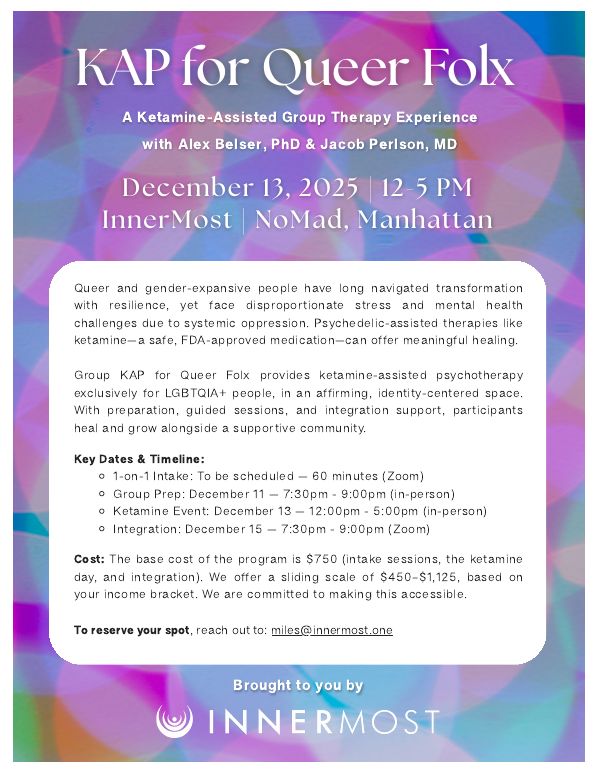
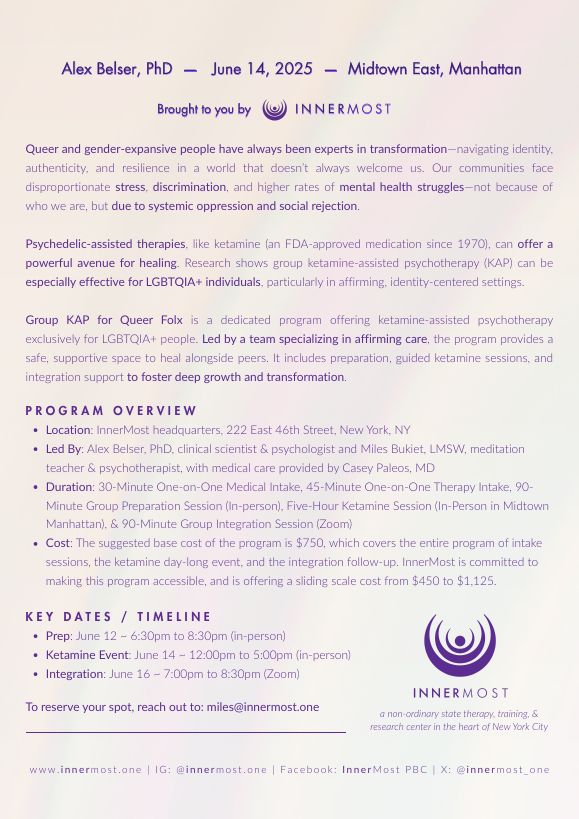
About InnerMostAffinity-based group ketamine-assisted psychotherapy, preparation, a guided medicine day, and integration together. Recent groups have centered queer and gender-expansive folx and queer clinicians.

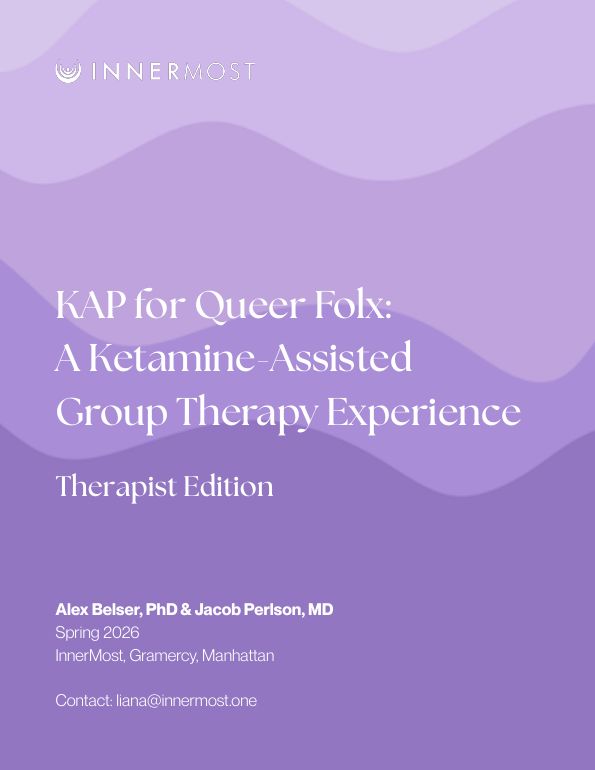
See the groupsRun with colleagues at InnerMost, these groups offer ketamine-assisted psychotherapy exclusively for LGBTQIA+ people, with sliding-scale pricing. Flyers from each group are below; to ask about upcoming groups, write alex.belser@nyu.edu.
How I Work
Ketamine is not a shortcut. In my practice it lives inside the ordinary, careful work of psychotherapy: a thorough intake, preparation, the dosing session itself, and integration sessions where the experience becomes change. My approach draws on the EMBARK model, attention to the existential, the body, emotion, relationship, and follow-through.
Research I've contributed to suggests ketamine can meaningfully reduce depression and anxiety for many people; it also has limits and risks, which we discuss honestly before any treatment. KAP isn't right for everyone, and a careful medical and psychological screening comes first.